Sunday, 24 June 2018

May Samples


18/18 Pizza
Every week I think, what’s caught my eye? What have I seen recently that’s a bit different? It doesn’t (quite!) always have to be nature…

A trip to the city, a rare meal out – pizza! Pizza Express Vegan Giardiniera to be precise. Artichokes, olives, mushrooms, red onion, vegan “mozzarella”.

So here’s a little piece inspired by (not meant to look too much like!) a pizza. It could possibly be a brooch?

18/19 Primrose lace
OK, so I’ve done several versions of primroses before… but they’re everywhere right now, I just have to play with them again!

For something a bit different, I tried an open, lacy piece – entirely in free machining on soluble fabric.
     
18/20 Whelk shell
This spiral design came from an unusually colourful whelk shell I found on the beach – looking down the whorls from the apex.
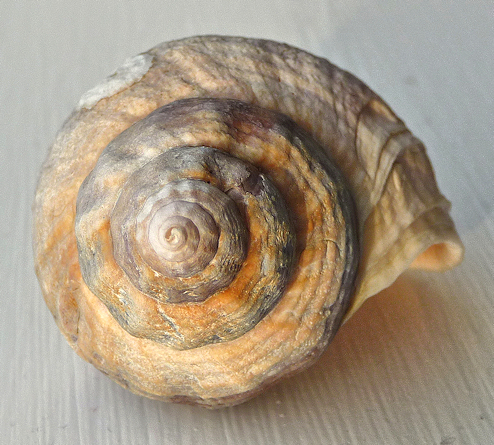
I used the Embellisher to make a background, first meshing together loose weave cotton and scrim then adding a rough spiral of white and purple wool fibres.

Then I just had fun with hand embroidery in various purple, yellow and cream threads – running, stem and chain stitches and some French knots.

18/21 Bluebells
I think bluebells are my favourite wildflowers... though I might waver when foxgloves and primroses are about. It’s not the individual plants but the effect of hundreds, thousands of them - that fabulous blue-purple carpet. One of the special treats of a UK spring!

So it was the density of flowers I wanted to capture with this little sample, and I decided the only way to get that was to overlay several layers of embroidery. 

I free machined three strips of stems/leaves and flowers on Aquasol, using Madeira Rayon 40, ranging from 3cm to 4.cm tall. After dissolving and drying I overcast the layers together at the base.


18/22 Cape Daisy
I love to photograph flowers really close up, the centres are often fascinating. This one is a Cape Daisy.
It led to a little sample combining machine and hand embroidery. I pencilled the outline on white cotton fabric, and coloured the centre yellow with fabric crayons. Then I free machined the petals using grey-purple for their outlines and variegated lilac filling.

In the centre I stitched French knots in dark purple perle 8 and golden yellow stranded cotton, with a few purple straight stitches added to fill gaps.

Sunday, 6 May 2018

April samples

18/14 Lichen
I've been studying the lichens on our shore - the more you look, the more you find, and the closer you get the more beautiful the colours and textures.

For my lichen sample I coloured a piece of Tyvek yellow quickly with Neocolour II, then sandwiched it in baking parchment and bubbled it with an iron. I free machined it onto a mustardy felt , just scribbling round the bubbles and craters to attach and define areas.
 
Then some crusty cable stitch, working from the back with variegated Anchor pearl cotton (1304) on the bobbin.

I was going to add some hand embroidery but in the end I decided it didn’t need any more.
 
18/15 Coltsfoot
This time of year is all about yellow – daffodils, celandines, primroses, gorse, coltsfoot. And it’s so welcome and sunny after the winter, even if yellow is actually one of my least favourite colours.
 
On a walk just along the coast at Ashaig, the dead grasses underfoot were studded with bright yellow flowers a bit like dandelions. Coltsfoot produces its flowers before its leaves, so they really stand out.
I made the flowers by free machine embroidery on soluble fabric, plus French knots for the centres. The background is assorted yarns free machined in a sandwich of soluble film.
 
18/16 Wind turbines
Wind turbine blades play a big part in life on south Skye at the moment. It’s not about where we get our electricity, it’s the hold ups and lack of parking caused by transport of the huge blades from the dock at Kyle, via Broadford airfield, to the wind farm project miles away on the mainland. It’s actually pretty amazing to watch these extreme loads being manoeuvred round the narrow roads and bridges – as long as you’re not in a rush to get anywhere! This week two ships full have been sitting just outside Kyle, in sight from our house, waiting to dock since the weekend.

I wanted clean, simple motifs so I decided to hand stitch my turbines on paper using fine machine embroidery thread. The centres are silver cup sequins. I do love the crispness of stitch on paper, and the visible perforations.
 
18/17 Great Northern Diver
Great Northern Divers (aka loons!) have been coming in close to the shore here recently. Beautiful birds, amazing patterns. Sample using FME on velvet.


Sunday, 8 April 2018

March samples part 3

18/12 Tête-à-tête
Flower of the month - a real favourite, the miniature daffodils that make a wonderful splash before much else is out.
Trying not to be too precise for a change, I used the embellisher to needle felt bits of green tapestry wools onto a Harris tweed scrap. Then I used thin strips of a very fray-ey (that's what I wanted!) yellow satin fabric to work free cross stitches for the flowers.
18/13 Orts
Have you heard of orts? They're leftovers. For textile people, the short lengths of yarn or thread leftover from any needlecraft or fibre art. I can't throw them out... but what to do with them?

Last year I bought yarn for two cushion covers for the sofa in our window, and crocheted them in a wavy pattern to reflect the sea view.
There was lots of spare yarn, so I started crocheting hexagons. Still ongoing, but I like them so much I've now bought more yarn and am heading for a double bed throw! So much for using it up, ha.
Each motif has six colours, so that's 12 ends to darn in and snip off...
And so, at last, we get to this week's textile play time. Using the embellisher again, I covered wool-viscose felt with a layer of yarn snippets. From that I made myself a book cover, a pin cushion and a mini travel needle book.
        

Friday, 23 March 2018

March samples part 2: Yorkshire buttons

Bit of a departure here, but no apologies – my only brief for this year’s samples is to respond to anything that interests me. Preferably different to my other, “work” stitching.

I firs came across Yorkshire buttons just the other week on Gina Ferrari’s blog Fan my Flame, where she’d finished a beautiful handmade coat with some. Being a Yorkshire lass though and through, I was ashamed I’d never heard of them. And obviously had to try making my own!
Pretty, aren’t they? But more decorative than practical, I think. Little seems to be known about the origin of these buttons but I can’t believe they ever made a worthwhile industry.

They’re basically ribbed spider’s web stitch, freed from any fabric. A stitch I love anyway – see my Limpets post for example. There are several articles online with instructions, but I found Mary Hickmott's was the best.

You create the spokes on a notched circle of card, then sort of back stitch round and round them, going under two spokes forwards and over one back. You need an even number of spokes, say 12 to 18. This was my first attempt - I ran out of thread! The loops shouldn't be so big.
It's tricky to estimate the right length of thread to complete without a join. It depends on the diameter of the template, the number of notches, and the thickness of the thread. A nightmare for me, with my waste phobia.  And I didn't enjoy pulling vast lengths of thread through for every stitch - perhaps not something to do sitting round a table with other people either, you could take an eye out! 😉

This is how they look when you pop them off their cards:
I love these! The free-standing spider’s webs might be good for cards or hanging decorations, even jewellery? Slightly gathered into little domes or dishes, you could possibly use them in an art composition. 
 
But for buttons you thread the remaining yarn through the loops and gather up over a disc of card (or maybe recycled plastic) for a flattish finish, or a bit of toy stuffing or wadding for a domed shape. Unfortunately a lot of the pretty stitching is wasted on the back with a flat button; maybe that’s a reason to make them spherical.  

Thicker threads are quicker to stitch and variegated ones look fantastic, But the centres can be a bit ugly and bulky:
So using a thinner thread for the spokes is sometimes a good idea:
And if you have 14 or 18 spokes you can do a bit of weaving for variety - just weave under and over two spokes at a time.       
Each button I made suggested other variations to try… but I’ll stop now before I get addicted!